Factors to consider when buying security camera systems for businesses
For any business, ensuring the safety of office premises is of paramount importance. This is where security camera systems come into the picture. They help monitor daily operations, prevent theft, and provide valuable evidence in the event of incidents. However, not all security camera systems are the same. Choosing the right setup requires careful consideration, as different features serve different business needs. Understanding their features can help ensure the surveillance system delivers reliable protection without unnecessary costs.
The type of cameras
Setting up CCTV surveillance for business starts with choosing the right camera. Some of the options include bullet cameras, dome cameras, and PTZ cameras. Bullet cameras are usually cylindrical or cuboidal. They offer long-range viewing, making them ideal for surveilling outdoor areas, entrances, parking lots, and perimeter monitoring. But the main advantage that sets bullet cameras apart is their clear visibility, owing to their size. So in a way, they serve as warnings and possible deterrents to miscreants.
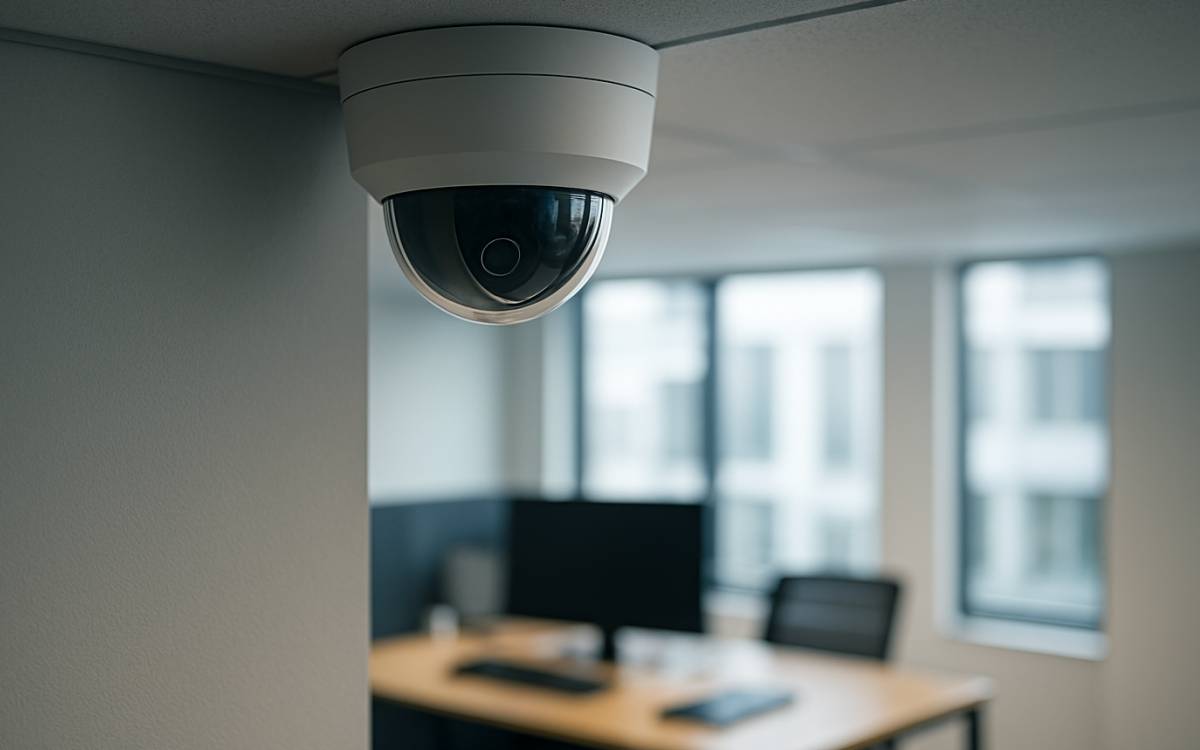
Dome cameras, on the other hand, are more discreet and harder to notice at a glance. Plus, due to their shape, they offer a wide viewing range and a high degree of flexibility. So one can rotate the position of the lens to capture footage across a wider area. And their shape makes it difficult for subjects to tell which direction the camera is facing, giving them a slight edge in surveillance.
PTZ cameras, short for pan-tilt-zoom, offer even greater control. These cameras can rotate, tilt, and zoom in on specific areas, allowing detailed monitoring across large spaces. These types of cameras are often used in warehouses, large retail floors, or open premises where flexible coverage is required.
The image resolution
The effectiveness of a security system largely depends on the type of camera used and the quality of images it produces. While higher-resolution cameras may require a larger investment, they provide clearer footage, making it easier to identify faces, read license plates, and notice important details that may not be produced by local, cheap systems.
Security cameras are usually available with SD, HD, or 4K resolution. For office security solutions, businesses should consider 1080p HD as the minimum standard. However, for clearer footage and sharper images that allow finer details to be viewed, the right choice should be security cameras with 4K resolution.
Remote access
One of the most essential features that commercial video surveillance cameras must have is remote access. With this feature, business owners or security managers can view live feeds and access recorded videos of their premises at any given time, from any location. This eliminates the need for them to be physically present in the office to access the recorded footage. That said, the surveillance system must also have proper authorization controls in place. This ensures that only authorized personnel can view or manage the footage.
Cloud storage
Cloud storage for surveillance systems simplifies the process significantly. Businesses no longer need to rely on physical storage devices to save their recorded footage, eliminating concerns about theft or damage to these devices. Additionally, they won’t have to invest in new storage solutions every time their current devices reach capacity. Cloud-based video monitoring systems also allow authorized individuals to access footage from anywhere with an internet connection, improving convenience and flexibility.
Top security camera systems for businesses
Arlo Ultra 2
This security surveillance system comes with three cameras, offering 4K resolution and a 130-degree field of view. The cameras also include integrated spotlights and offer cloud storage, with an additional subscription fee.
Eufy
The Eufy 4G LTE Cam is a single 4K security camera that offers a complete 360-degree field of view with a tracking feature. Users can also opt for cloud storage, which will cost extra for the subscription.