Private workspace cubicles – Benefits, types, and layouts
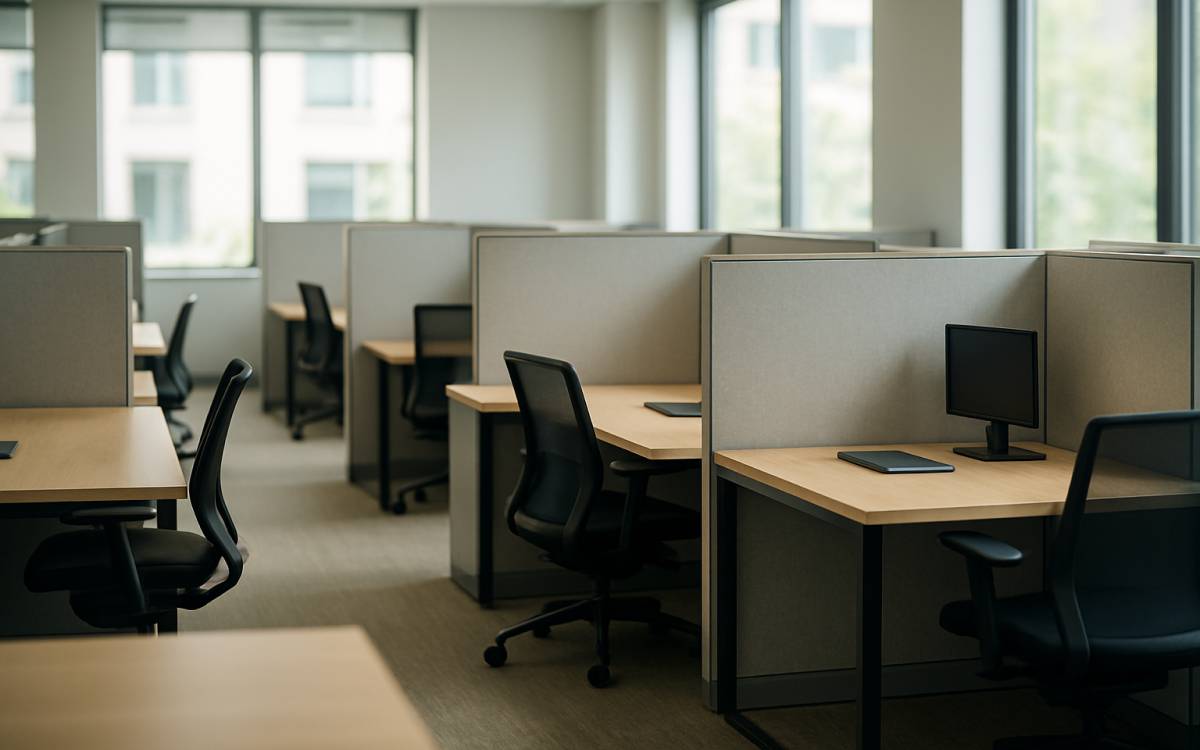
Knowing how to collaborate with team members and maintain individual focus is crucial in a workplace. This can be achieved through a workspace and layout that support teambuilding and personal productivity. Open spaces can be noisy and cause distraction, while a closed-off space can disrupt team harmony and productivity. So, what can be done? Reimagining the office layout to include private workspace cubicles can boost productivity. Before choosing a cubicle setup, it is important to consider a few things.
Reasons to adopt private cubicles in offices
Noise reduction
Cubicles help dampen sound and reduce the ambient noise levels in a workplace. Their high panels, enclosed layouts, and acoustic materials reduce sound transmission caused by conversations, calls, and work equipment. A quieter environment makes it easier for employees to focus on their tasks and finish them quickly and without errors.
Visual privacy
The walled panels in cubicles provide visual separation to employees and limit interruptions and unwanted distractions they may otherwise experience. Many offices have enclosed or high-panel designs to prevent constant eye contact between workers and to break the flow of focus when movement occurs in the background.
This relative isolation helps individual workers feel more comfortable and allows confidential discussions without constant visual interference from others.
Increased productivity
When visual and noise-driven distractions are minimized in an office, employees can find greater clarity and focus in their work. In many cases, employees find themselves more immersed in their work when they have a dedicated cubicle with fewer distractions. This naturally leads to improved output and consistent meeting of work deadlines.
Flexibility
Team-driven office work demands frequent collaboration and changes in layout. This means that employees cannot just be isolated in their cubicles all the time. Fortunately, modern office cubicle designs can be reconfigured to accommodate such changes. The panels, desks, and partitions in private cubicles can be rearranged or expanded. This is beneficial as teams grow and workflows change over time.
This flexibility supports department switches without requiring permanent reconstruction or major office layout changes.
Types of private workspace cubicles
Standard modular cubicles
These are cost-effective workstations that come with uniform dimensions for each personal cubicle. With minimal expenditure, companies can build these in their offices and immediately start work operations, as the cubicles can be quickly set up.
Executive cubicles
These are larger cubicles with more storage and space for additional chairs and tables. Executive-level officers and managers in a company work in such cubicles. The extra room helps managers hold low-level team meetings with their staff in the cubicle itself without having to move to a conference room.
Executive cubicles are an extension of private cubicles, and they are built with premium materials and feature expensive finishes.
Acoustic booths
These are also occasionally referred to as soundproof workspace cubicles. They are enclosed, and their panels are built using sound-absorbing materials. These soundproof pods are ideal for making phone calls, performing confidential tasks, or attending virtual Zoom meetings.
Team pods
These are clustered cubicles that make it even easier for employees from different teams to work closely when collaboration is needed. At the same time, they help maintain individual privacy at all times, like all other private workspace pods.
Mobile workstations
Many office tasks involve temporary project teams, including workers from different locations. Mobile workstations feature cubicles on wheels or with lightweight panels that can be moved to accommodate such projects.
Consideration factors for private cubicle design
Cable management
A cubicle needs to include wiring to connect various devices, such as printers, computers, and phones, to the mains power supply. Before building the office layout, the cable work should be done seamlessly so that wires do not get mixed up, even when cubicles are reconfigured.
Sound insulation
The walls of each cubicle need proper noise insulation so that ambient sounds from outside are filtered before they trickle into the enclosed space.